


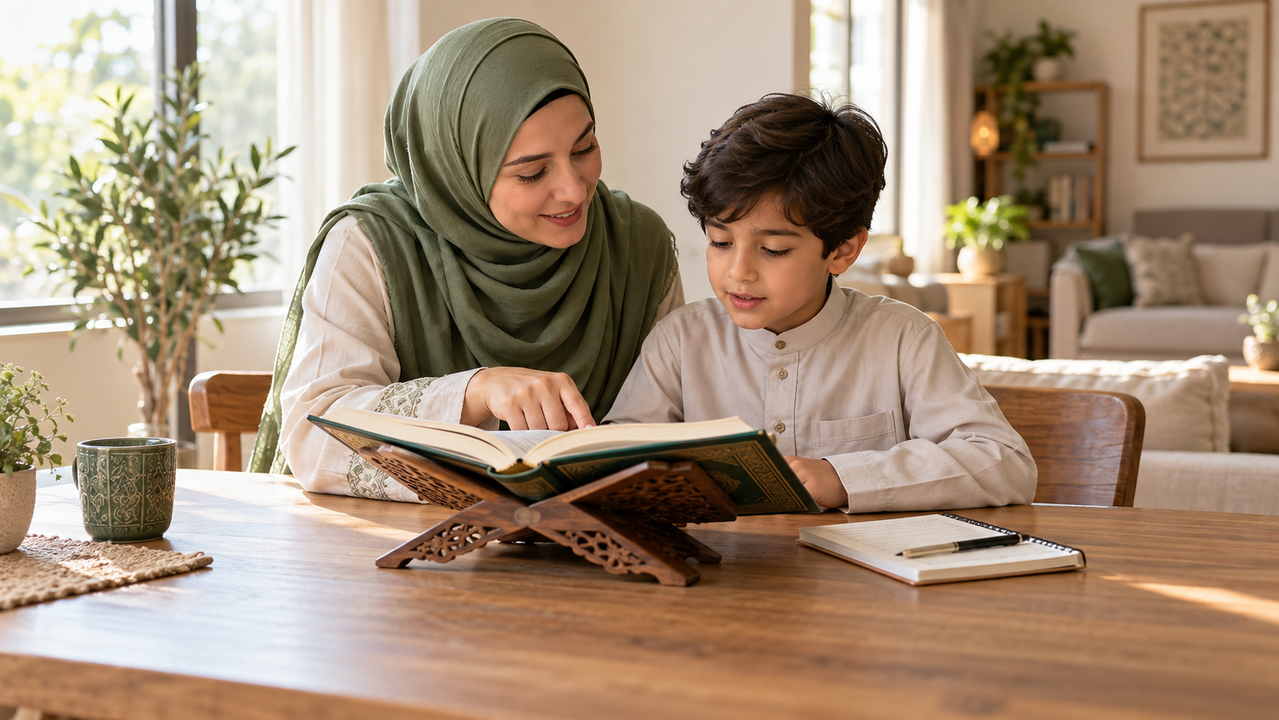
Many Muslims want to spend more time reading the Quran, yet find it difficult to maintain a regular routine. Work, school, household responsibilities, and tiredness can turn a sincere intention into something repeatedly postponed.
The solution does not always require more free time. Often, it begins with choosing a manageable goal, setting aside a predictable part of the day, and creating an environment that supports attentive reading.
A Quran reading routine should help you develop a lasting connection with the Quran. Whether you are a beginner learning to recognize Arabic letters, a parent supporting your children, or an adult returning to regular recitation, the following steps can help you begin.
1. Start with a Clear and Sincere Intention
Before deciding how many pages to read, consider why you want to establish this habit. You may wish to improve your recitation, understand what you read, support your children’s learning, or make the Quran a more regular part of your life.
Keep that purpose in mind when progress feels slow. A reading routine is more than a task to check off a list. It is an opportunity to approach the Quran with care, learn patiently, and reflect on its guidance.
Set goals that support this intention. Instead of focusing only on finishing a certain number of pages, aim to read attentively and improve gradually.
2. Choose a Time You Can Maintain
The best time for your routine is a time you can realistically protect.
Some people find it easier to read after Fajr, before daily responsibilities begin. Others prefer a quiet period after work or an evening session with their children. Your choice should reflect your circumstances and level of alertness.
Connect Quran reading to something already established in your day. For example
After Fajr, read for ten minutes before checking your phone.
After returning from school, let your child rest before a short reading session.
After Maghrib, set aside time for family recitation.
Before bed, review a familiar passage if you are still alert enough to concentrate.
Choose one regular time and a backup time for unusually busy days. This makes it easier to continue when your usual schedule changes.
3. Make Your Starting Goal Small
An ambitious plan can feel encouraging at first but become difficult to sustain. Begin with an amount of reading that fits comfortably into your day.
For a beginner, this might mean practicing a few letters or reading several short lines. A more confident reader might begin with half a page or one page.
Try a ten-minute session:
Two minutes to review the previous lesson.
Five minutes to read a manageable passage.
Three minutes to repeat difficult words or consider the meaning.
This is a practical starting point, not a religious requirement. Adjust it to your reading ability and circumstances.
On a difficult day, a shorter session can help preserve the routine. Increase the length when your current goal becomes comfortable.
4. Prepare a Comfortable Reading Space
You do not need a separate room or an elaborate setup. A clean, comfortable place with suitable lighting can help you concentrate.
Keep your Mushaf, reading stand, notebook, and any learning materials nearby. If you use a digital Quran, silence notifications and close unrelated applications before beginning.
For children, prepare the space before inviting them to read. A suitable seat, clear text, and a calm atmosphere can make the session easier to follow.
The purpose is to reduce distractions and make starting simple.
5. Give Accuracy More Attention Than Speed
A consistent routine should support careful recitation. Finishing a page quickly is less useful if the same pronunciation mistakes continue unnoticed.
Read at a pace that allows you to pay attention to letters, vowel markings, and stopping points. When a word is difficult, pause and practice it rather than repeatedly rushing through it.
Listening to a reliable reciter can support practice, but a recording cannot identify your individual mistakes. If you are unsure about pronunciation, seek feedback from a qualified Quran teacher.
Learners who need structured support can explore a Quran reading course that combines guided recitation with Tajweed practice. The aim should be to apply the teacher’s corrections during your daily reading at home.
6. Include Time for Understanding
Recitation and understanding can support each other. Alongside your reading, consider spending a few minutes with a reliable translation of the passage.
You do not need to study a large section every day. Begin with a small portion and reflect on a clear lesson, such as gratitude, patience, honesty, or responsibility.
Keep a notebook for questions you would like to discuss with a knowledgeable teacher. Where a verse requires explanation, consult reliable Tafseer rather than drawing conclusions from an isolated translated sentence.
For children, choose a brief, age-appropriate explanation. A simple discussion about kindness or thankfulness can connect their reading with everyday behaviour.
7. Help Children Build the Habit Gently
Children often need support with both learning and routine. Short, encouraging sessions are usually easier to manage than long sessions that leave them frustrated.
Choose a time when your child is reasonably rested. Begin with something familiar, introduce a small amount of new material, and finish by acknowledging a specific effort.
For example, you might say, “You remembered that letter today,” or, “You slowed down and read that word carefully.”
Avoid comparing siblings or expecting every child to progress at the same pace. Their ages, confidence, and learning needs may differ.
Parents can also model the habit by reading regularly themselves. A child who sees Quran reading as part of family life has a clear example to follow.
8. Match Your Learning Support to Your Needs
Different learners need different kinds of help. A complete beginner may need foundational instruction before reading independently. Another learner may recognize the words but need correction in pronunciation or greater confidence.
When choosing a teacher or learning program, consider:
Whether instruction matches your current ability.
How mistakes are explained and corrected.
Whether the lesson schedule fits your home routine.
What practice is expected between lessons.
How progress is reviewed.
Online academies such as QuranHost Online Academy are one option for families seeking instruction from home. Whatever arrangement you choose, regular independent practice should complement the lessons.
9. Track Progress Without Creating Pressure
A simple weekly record can help you notice patterns. Write down whether you practiced, what you read, and one point to review.
You might record:
Monday: Practiced five lines and reviewed a difficult letter.
Tuesday: Repeated the passage with fewer pauses.
Wednesday: Asked the teacher about a stopping point.
Thursday: Read a short translation and noted a question.
Progress is not measured only by pages completed. Clearer pronunciation, better concentration, and greater confidence are also meaningful improvements.
If you miss a day, return at your next planned session. Avoid turning one missed session into a reason to abandon the routine.
10. Review and Adjust Your Routine
After two weeks, consider what is working. Is your chosen time convenient? Is the amount manageable? Are you practicing the corrections you receive?
Change one element if necessary. Move the session to an earlier time, reduce the reading target, or ask for help with a recurring difficulty.
During travel, examinations, or demanding work periods, maintain a simpler version of the routine. Return to your usual schedule when circumstances allow.
A lasting Quran reading habit grows through repeated, thoughtful practice. Begin with a small commitment, protect a regular time, and seek guidance where needed. Over time, those ordinary daily sessions can become a valued part of life at home.
Author Bio
Dr. Muhammad Irfan is the CEO and Founder of QuranHost Online Academy and a Lecturer in Islamic Studies. His work focuses on Quran education and helping children and adults access structured Islamic learning.