

Faith Meets Modern Research
Discover how Qur’anic reflection, dhikr, and prayer connect with neuroscience and psychology to reduce stress and improve mental health.
Where Faith Meets Science
Islam has long emphasized the balance between spiritual and physical health. Modern research now echoes many insights found in the Qur’an and Hadith - from mental wellness to nutrition and preventive medicine.


Big Bang & Qur’an — Cosmology and Creation (with PMC Research)
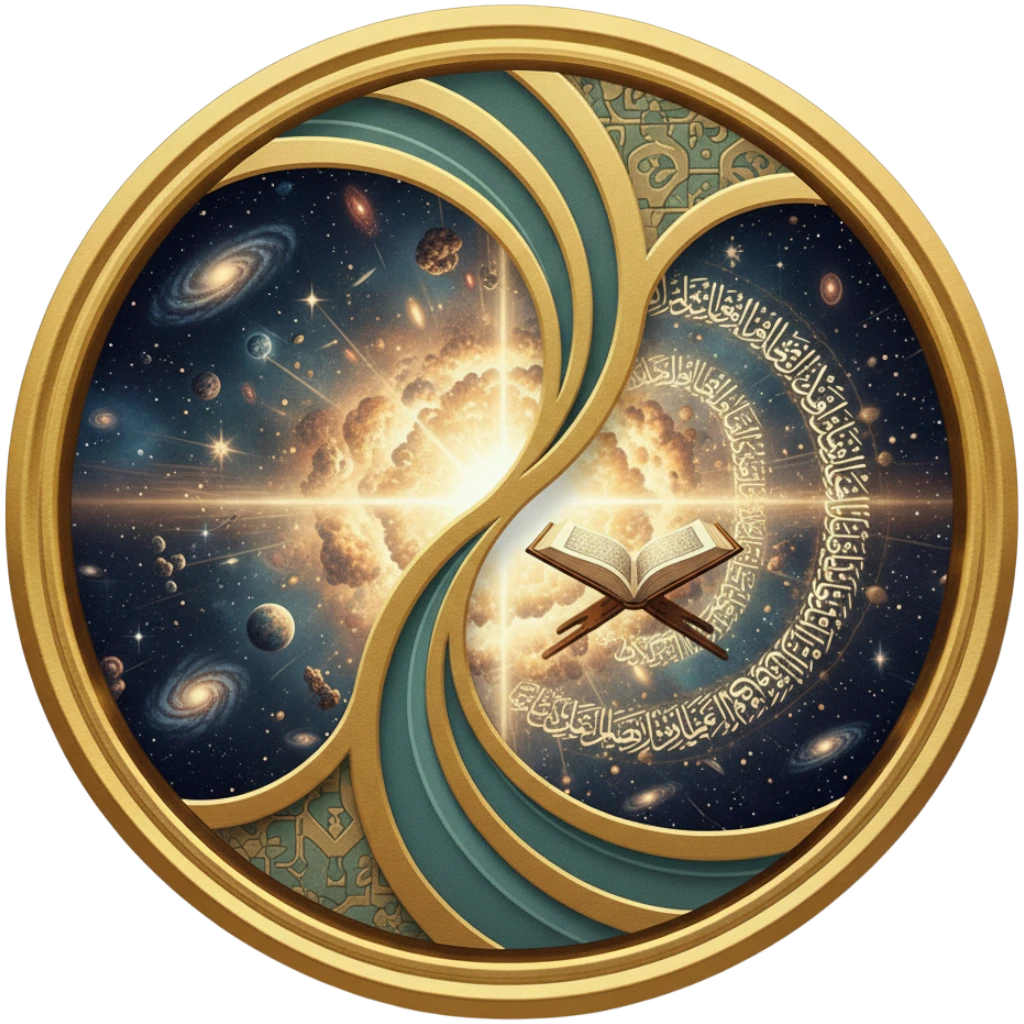 The Qur’an describes the heavens and earth as once joined and then separated (21:30), refers to the heavens being ‘expanded’ (51:47), and likens the early sky to smoke (41:11). Modern cosmological research supports these ideas. For example, studies on the **Cosmic Microwave Background (CMB)** (PMC5253920) show that the universe was once extremely hot and dense and then cooled as it expanded. Observational evidence of galaxy recession (PMC314128, PMC4371983) confirms Hubble’s discovery of cosmic expansion. Computational cosmology (PMC5255573) models the universe’s evolution from an initial singularity (or near-singularity) through expansion phases, mirroring the Qur’anic theme of a cosmic beginning and growth. While these scientific papers do not reference religious texts, their findings resonate closely with the Qur’anic descriptions of the early universe.
Quran References:
Modern Research:
Category:
Faith Meets Modern ResearchThe Interaction of Faith and Science Mindsets
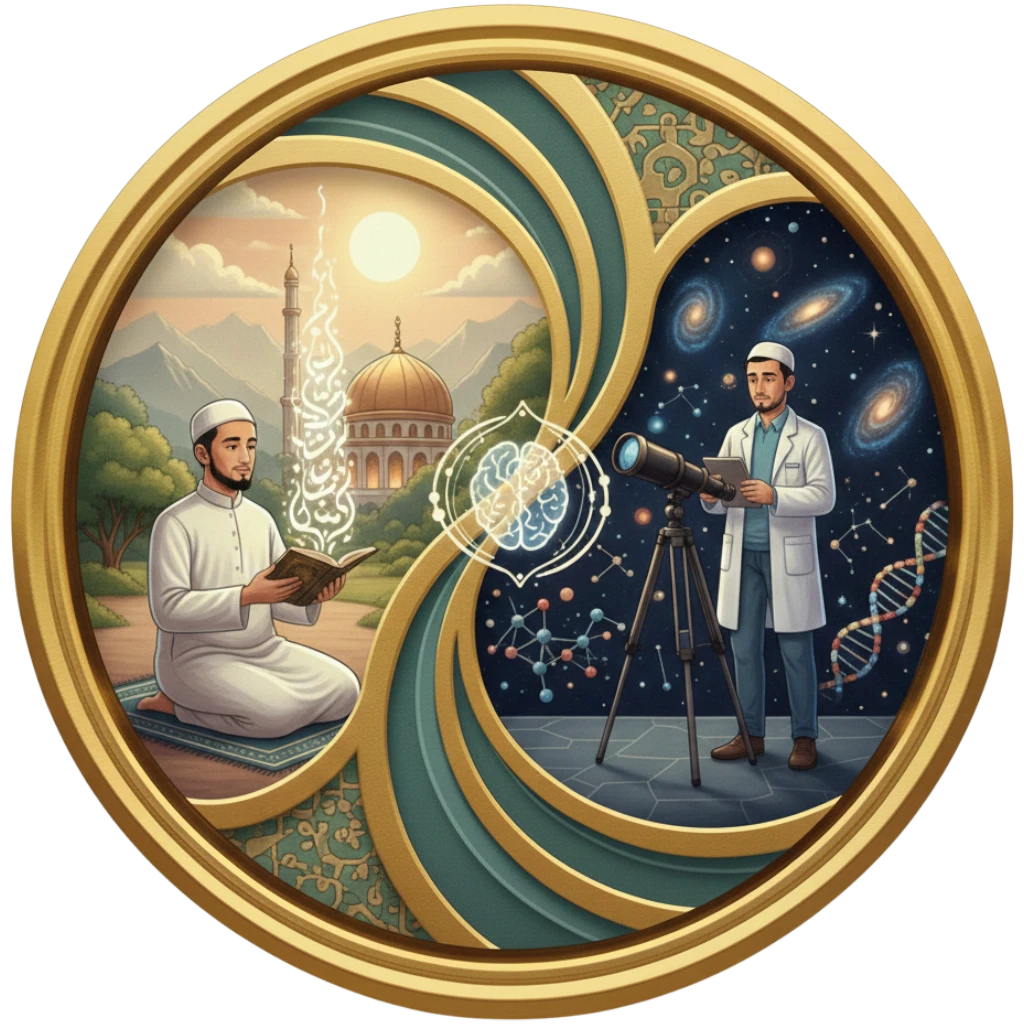 This study examines how faith and science mindsets interact. The Quran encourages observation, understanding, and reasoning in order to strengthen belief and informed decision-making.
Quran References:
Modern Research:
Category:
Faith Meets Modern ResearchPrayer / Devotional Practice — coping with stress & improved well-being
 A body of research on prayer/meditation indicates moderate benefits for stress reduction, coping, and mental health. Mechanisms include activation of relaxation response, social support, and meaning-making — all of which are consistent with Qur'anic/hadith encouragement of remembrance and reliance on Allah.
Quran References:
Modern Research:
Category:
Faith Meets Modern ResearchQur'anic recitation / Dhikr — mental health, anxiety, stress reduction
 Studies (systematic reviews and trials) show listening to or reciting the Qur'an and structured dhikr interventions can reduce anxiety and improve mental well-being (e.g., in preoperative settings, cancer patients, and the elderly). Prayer and devotional practices more broadly are associated with stress buffering in several studies.
Quran References:
Modern Research:
Category:
Faith Meets Modern ResearchIron Sent Down — Cosmic Origin
 The Qur’an states that iron was 'sent down', which classical scholars interpreted as a divine blessing and provision. Modern astrophysics demonstrates that iron is not formed on Earth; it originates from high-energy stellar processes such as supernova explosions and neutron-star collisions, before being delivered to forming planets. This aligns with the concept that iron was 'sent down' to Earth. Trace iron in primordial cosmic dust, meteorites, and planetary accretion supports this phenomenon. Thus, modern cosmology and nuclear astrophysics affirm the Qur’anic description of iron’s extraordinary extraterrestrial origin and its vital role in human civilization.
Quran References:
Hadith References:
Narration :Allah sent down iron...
Modern Research:
Category:
Faith Meets Modern ResearchDua Changes Fate — Supplication & Divine Decree
 The Qur’an commands believers to call upon Allah, promising response. Prophetic teachings state that supplication can shape destiny and repel hardship. While divine decree is metaphysical and beyond empirical measurement, modern psychology and neuroscience research show that sincere prayer and spiritual supplication significantly influence emotional resilience, coping ability, stress response, and decision-making clarity — all mechanisms through which life outcomes can change. These findings align with the belief that dua has real effects in altering the course of one’s life through spiritual and tangible pathways.
Quran References:
Hadith References:
Narration :Nothing increases one's lifespan but righteousness, and nothing repels destiny but supplication.
Modern Research:
Category:
Faith Meets Modern ResearchOceanography & Deep Sea Darkness
 The Qur’an describes the vast seas and the hidden depths (‘two seas’, unseen layers). Modern oceanography finds that large portions of the ocean lie in perpetual darkness, beyond the sunlit photic zone, where unique life and ecosystems exist, light penetration is minimal, and bioluminescence replaces sunlight. Scientific studies on the dark ocean illustrate how the deep sea is a hidden realm with its own rules, aligning with the Quranic references to the unseen depths. This harmony invites reflection on creation’s layers and the scale of Earth’s water bodies.
Quran References:
Modern Research:
Category:
Faith Meets Modern ResearchDua / Gratitude / Patience — Behavioral Science Insights
 The Qur’an encourages gratitude (‘if you are grateful I will increase you’) and seeking help through patience and prayer. The Sunnah emphasises patience as a supreme virtue. Behavior science confirms that gratitude interventions improve mental health (less anxiety, more positive mood), and patience correlates strongly with better psychological well-being and resilience. These findings align with the revealed guidance on dua, gratitude, and patience: spiritual practices that shape behavior, emotion, and life outcomes.
Quran References:
Hadith References:
Narration :Whoever practices patience, Allah will give him patience and no one is given a better and more abundant gift than patience.
Modern Research:
Category:
Faith Meets Modern Research